Credentials · 10.0.0.1
10.0.0.1 Admin Login – Username and Password Guide
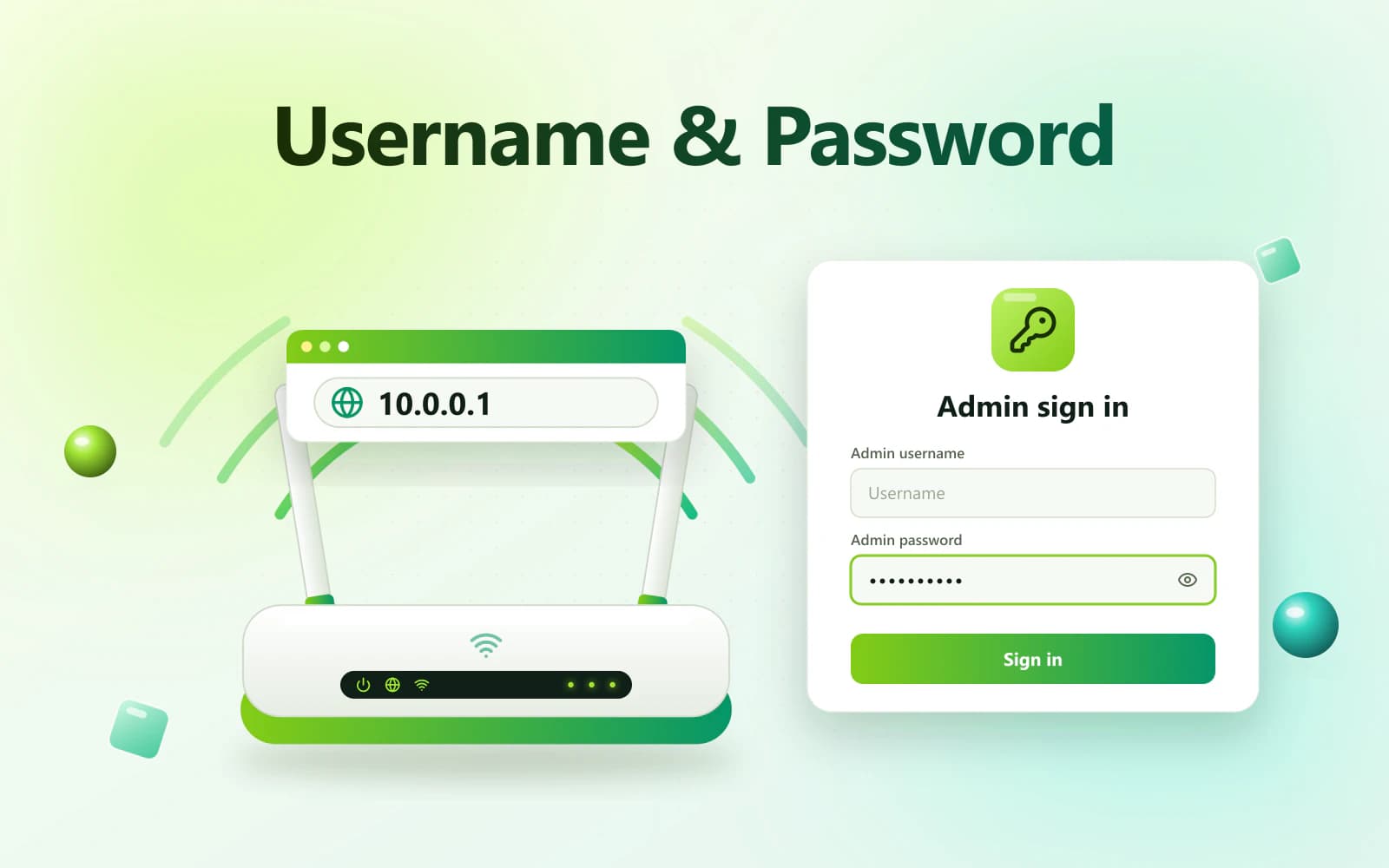
The 10.0.0.1 admin login page allows authorized users to manage their router or network gateway. If your router uses 10.0.0.1 as its Default Gateway, you can enter this address in a browser and sign in with its administrator username and password.
Opens your router login page in a new tab. Works only on your own network.
- Admin username
- Admin password
- Recover access

On this page21
Overview
What you can manage once logged in
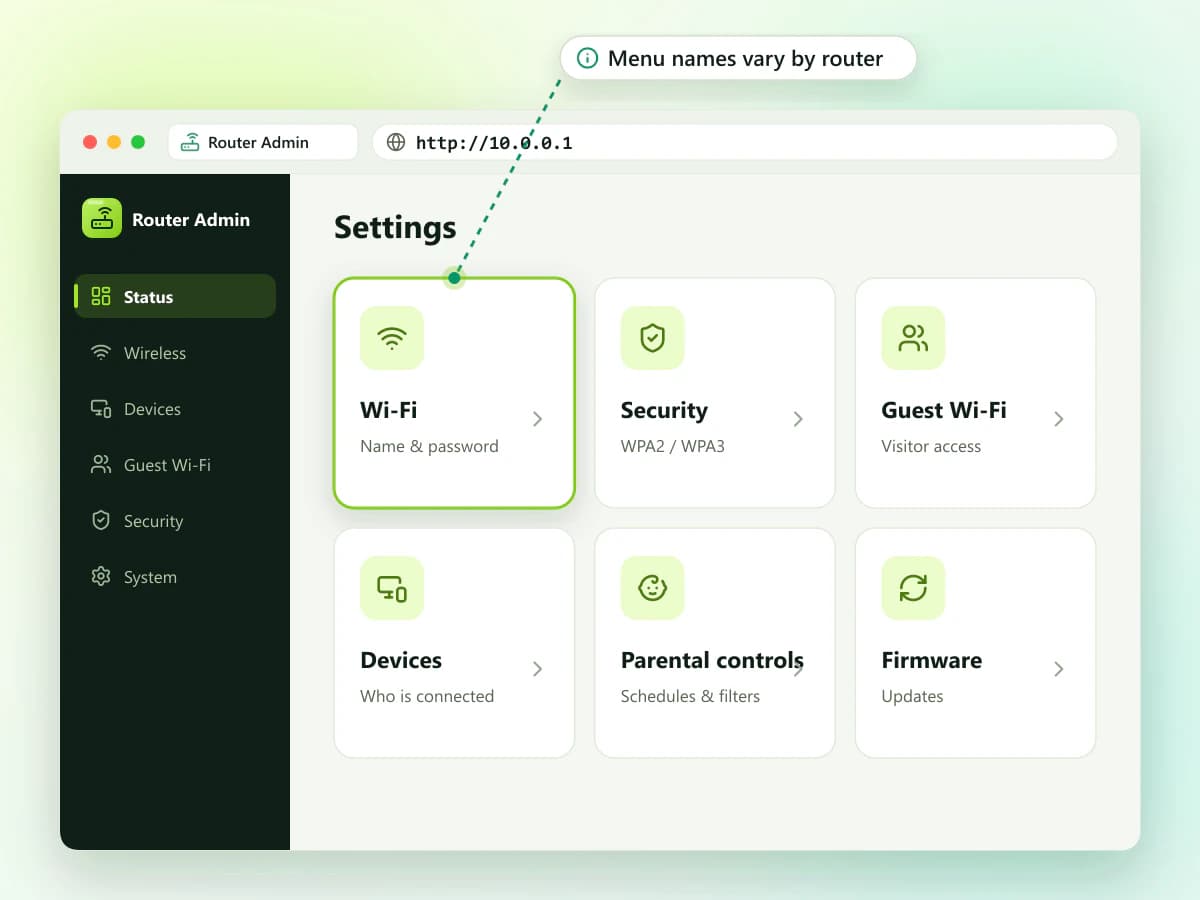
Once logged in, you may be able to change the Wi-Fi password, rename the network, view connected devices and manage security settings. However, 10.0.0.1 does not work with every router.
Before entering any login details, confirm that this is the correct gateway for your network.
The address
What Is the 10.0.0.1 Admin Login?
10.0.0.1 is a private IPv4 address. Some routers, modems, access points and network gateways use it as their local admin address.
Because it is a private address, it is normally available only to devices connected to the same local network. It is not intended to work as a regular public website.
The admin panel may provide access to:
- Wi-Fi name and password
- Wireless security settings
- Guest Wi-Fi
- Connected devices
- Parental controls
- Local IP settings
- Administrator account
- Firewall options
- Router firmware
- Network diagnostic tools
Available settings vary according to the router model and internet provider.
Step by step
How to Open the 10.0.0.1 Admin Login Page
Follow these steps to open your router panel:
- 01
Connect your phone or computer to the router.
- 02
Open Chrome, Edge, Safari or another trusted browser.
- 03
Click or tap the browser address bar.
- 04
Enter http://10.0.0.1.
- 05
Press Enter or Go.
- 06
Wait for the admin login page to appear.
- 07
Enter the authorized username and password.
- 08
Select Login, Sign In or Submit.
Only access a router that you own or have permission to manage.
Get the address right
Correct Login Address
Enter the following address directly in the browser: http://10.0.0.1
Avoid incorrect variations such as:
- 10.0.0.0.1
- 1.0.0.0.1
- 10.00.1
- 10.0.01
- 10.0 0.1
- 10.0.0.l
- 10..0.0.1
The last character in 10.0.0.1 is the number 1, not a lowercase L.
Credentials
What Is the Default 10.0.0.1 Username and Password?
There is no single 10.0.0.1 username and password that works with every router. Login credentials depend on the manufacturer, model, ISP and existing configuration.
Some routers have unique credentials printed on their labels. Other devices require the owner to create an admin password during the first setup.
Check these places for the correct details:
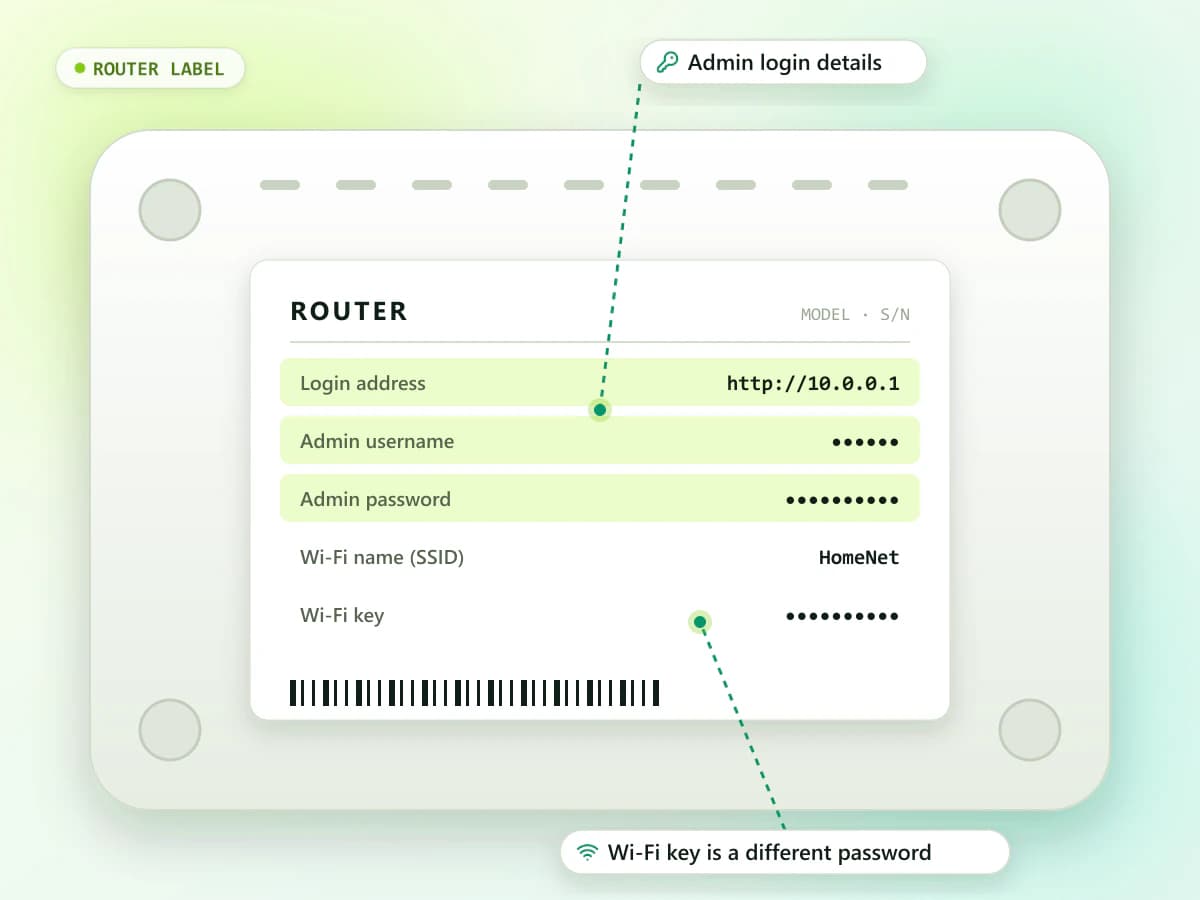
- Label underneath or behind the router
- Router setup manual
- Original packaging
- ISP installation documents
- Manufacturer’s official support website
- Browser’s saved passwords
- Trusted password manager
Avoid testing long lists of random usernames and passwords. Repeated failed attempts may temporarily lock the admin account.
Label wording
Common Default Login Formats
Some routers may arrive with a general username such as admin or user. The password might be printed on the router rather than shared across every device.
Possible labels include:
- Admin Username
- Admin Password
- Login Password
- Device Password
- Web Password
- Access Key
- GUI Password
These details are different from the Wi-Fi name and wireless password in many cases. A credential combination listed online should only be used when it is confirmed for your exact router model.
Know which password
Router Admin Password vs Wi-Fi Password
The router admin password and Wi-Fi password serve different purposes.
| Credential | Purpose |
|---|---|
| Wi-Fi password | Connects phones, computers and smart devices to Wi-Fi |
| Admin password | Opens the router settings and management tools |
| Wi-Fi name or SSID | Identifies the wireless network |
| Admin username | Identifies the administrator account |
Wi-Fi password
- Purpose
- Connects phones, computers and smart devices to Wi-Fi
Admin password
- Purpose
- Opens the router settings and management tools
Wi-Fi name or SSID
- Purpose
- Identifies the wireless network
Admin username
- Purpose
- Identifies the administrator account
Entering the Wi-Fi password on the admin page may produce an incorrect-password error. Check the router label carefully. The wireless password may be described as Wi-Fi Key, WLAN Key, Network Key or Pre-Shared Key.
Before a reset
How to Find Your Router Username and Password
Use the following methods before attempting a factory reset.
Check the Router Label
Inspect the bottom, back and sides of the router. The label may contain:
- Router login address
- Admin username
- Admin password
- Default Wi-Fi name
- Wi-Fi password
- Model number
- Serial number
- Do not publish or share a clear photograph of this label. It may expose private login details.
Method 01Check the Setup Manual
The router manual may explain how to access the admin panel and whether a default password is used. If you no longer have the printed manual, search for the exact model on the manufacturer’s official support website.
Method 02Check ISP Documents
An internet provider may install custom firmware or use login details that differ from the manufacturer’s defaults. Review the setup documents, customer portal or messages supplied during installation. Contact the ISP if necessary.
Method 03Check Saved Browser Passwords
If you previously logged in, the browser may have saved the username and password. Open the browser’s password manager and search for:
- 10.0.0.1
- Router
- Gateway
- Router manufacturer
- Router model
- Only reveal saved passwords on a trusted personal device.
Method 04Check Your Password Manager
Search your password manager for router, Wi-Fi, gateway or the device model. The admin password may have been stored during initial setup.
Method 05
Where to look
Label, manual and saved passwords
Router label
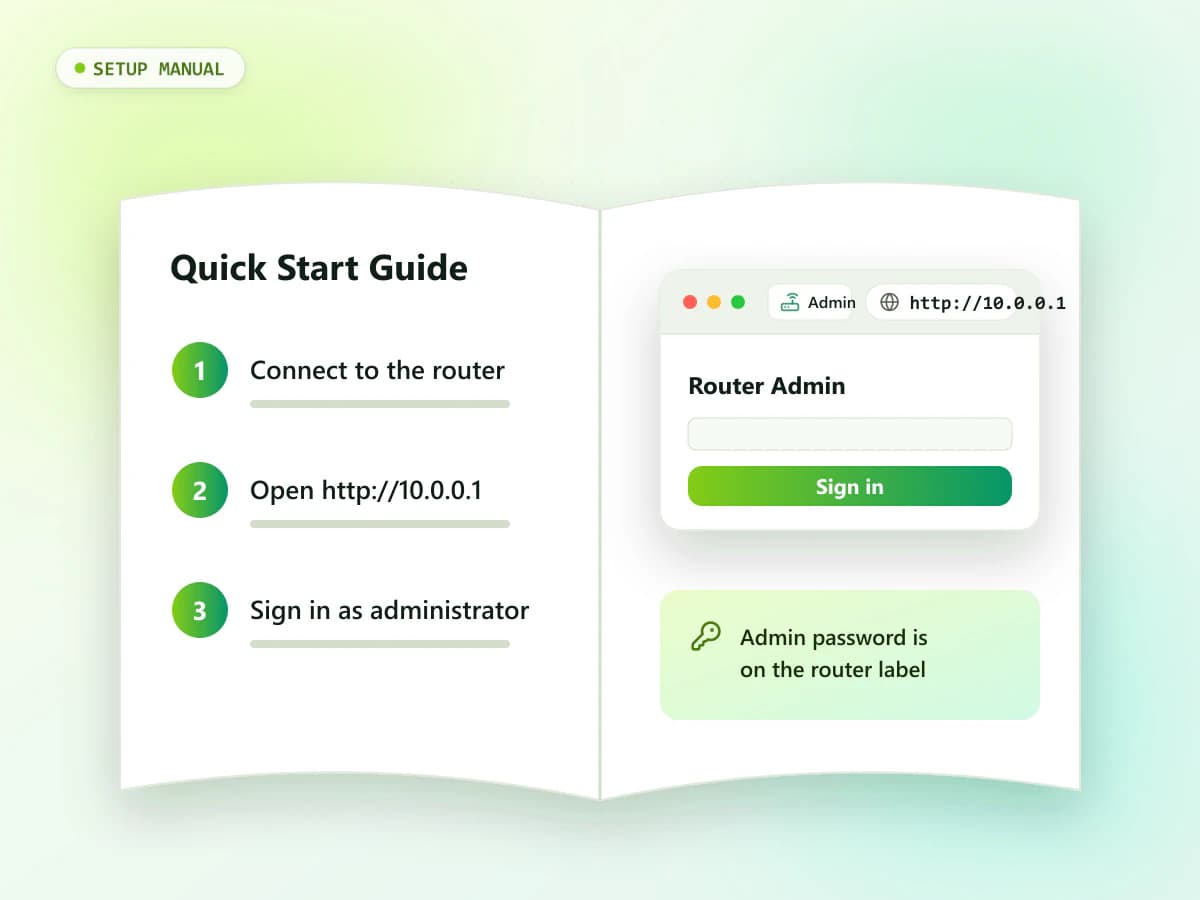
Setup manual
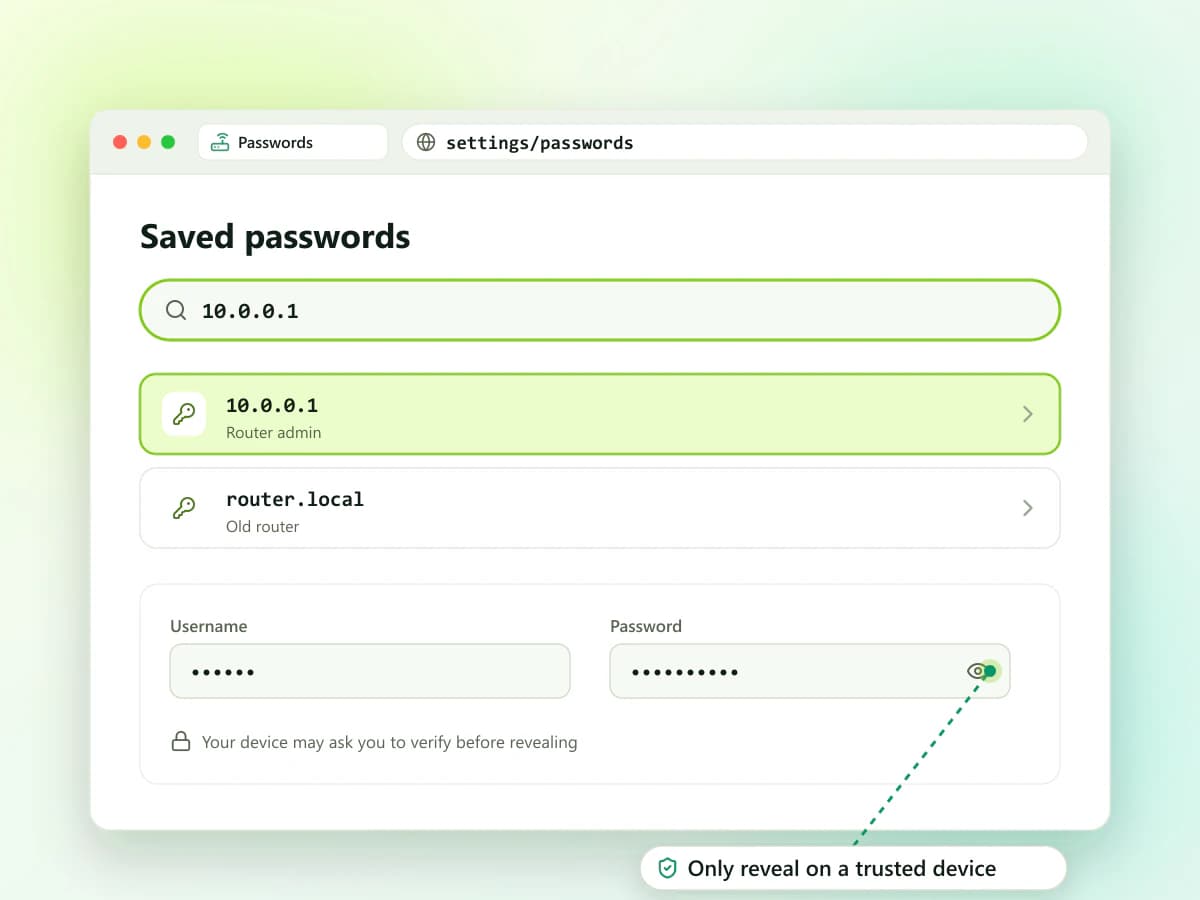
Saved browser passwords
Phones and tablets
Log in to 10.0.0.1 on your device
How to Log In to 10.0.0.1 on Android
You do not normally need a separate application.
- Connect the Android phone to the router’s Wi-Fi.
- Temporarily turn off mobile data.
- Open a trusted browser.
- Enter http://10.0.0.1 in the address bar.
- Tap Go.
- Enter the router username and password.
- Tap Login.
If the page does not open, check the connected Wi-Fi details for a field named Gateway or Router.
AndroidHow to Log In on iPhone or iPad
- Open Settings.
- Select Wi-Fi.
- Connect to the correct network.
- Open Safari or another browser.
- Enter http://10.0.0.1.
- Tap Go.
- Enter the authorized admin details.
To confirm the address, tap the information icon beside the connected Wi-Fi network and find Router.
iOS / iPadOSHow to Log In on Windows
- Connect the Windows computer through Wi-Fi or Ethernet.
- Open Chrome, Edge or Firefox.
- Enter http://10.0.0.1 in the address bar.
- Press Enter.
- Enter the admin username and password.
To verify the gateway:
- Press Windows + R.
- Enter cmd.
- Type ipconfig.
- Press Enter.
- Check the Default Gateway for the active connection.
If Windows displays another gateway, use that address instead of 10.0.0.1.
WindowsHow to Log In on macOS
- Connect your Mac to the router.
- Open Safari, Chrome or another trusted browser.
- Enter http://10.0.0.1.
- Press Return.
- Enter the router’s login details.
You can verify the gateway under System Settings > Network or Wi-Fi > Connected Network > Details > TCP/IP. Look for Router.
macOS
Troubleshooting
Why Is the 10.0.0.1 Login Page Not Opening?
Several issues can prevent the admin panel from loading.
10.0.0.1 Is Not Your Gateway
Not every router uses this address. Your device might show another gateway, such as:
- 192.168.0.1
- 192.168.1.1
- 192.168.1.254
- 10.0.1.1
Check the network settings instead of guessing.
Cause 01Your Device Is on the Wrong Network
A private router page normally works only from the router’s local network. Connect through its Wi-Fi or Ethernet connection.
You usually cannot access it through mobile data or a neighbouring Wi-Fi network.
Cause 02The Address Was Entered in a Search Box
Enter http://10.0.0.1 directly into the address bar. If the browser displays search results, try again using a private window.
Cause 03A VPN or Proxy Is Active
A VPN may send traffic away from the local network. Temporarily pause it and reload the router page.
Enable it again after finishing your changes.
Cause 04The Browser Has Cached Old Information
Try:
- Opening an incognito or private window
- Clearing the browser cache
- Using another browser
- Testing from another connected device
Cause 05The Router Needs a Restart
Disconnect the router’s power cable for about 30 seconds. Reconnect it and wait for it to start fully.
Do not press the reset button. Restarting and factory resetting are different actions.
Cause 06
Credentials
Why Is the Username or Password Incorrect?
A login error does not always mean the router is faulty. Common reasons include:
- The admin password was previously changed
- You entered the Wi-Fi password
- The username or password is case-sensitive
- The browser filled an old password
- Your ISP set custom credentials
- You opened the wrong gateway
- The router uses a unique label password
- Spaces were added before or after the password
Type the details manually. Check uppercase letters, lowercase letters and numbers carefully.
Recover access
Forgot the 10.0.0.1 Admin Password?
Try these recovery methods in order:
- Check the router label.
- Review the setup manual.
- Search saved browser passwords.
- Check your password manager.
- Ask the person who configured the network.
- Contact the router manufacturer.
- Contact your ISP if it supplied the router.
- Consider a factory reset only as the final option.
Do not use tools that promise to bypass or reveal router credentials. Such software may be unsafe or designed to steal information.
Last resort
Should You Factory Reset the Router?
A factory reset may restore the router to its original configuration, but it can also remove important settings.
You may lose:
- Current Wi-Fi name
- Wi-Fi password
- Administrator password
- ISP connection settings
- Guest network
- Parental controls
- Device restrictions
- Port-forwarding rules
- Other custom configurations
Contact your ISP before resetting provider-owned or provider-configured equipment. You may need connection details to restore internet service.
The exact reset procedure varies between models. Use the manufacturer’s official instructions.
Protect the panel
How to Change the 10.0.0.1 Admin Password
After signing in:
- 01
Open Administration, System or Account Settings.
- 02
Find Admin Password or Login Password.
- 03
Enter the current password.
- 04
Create a strong new password.
- 05
Confirm the new password.
- 06
Save or apply the changes.
- 07
Store it in a trusted password manager.
A strong admin password should be unique and difficult to guess. Do not reuse your Wi-Fi, email or social-media password.
Wireless
How to Change the Wi-Fi Password
If 10.0.0.1 is your actual gateway:
- 01
Open the admin panel.
- 02
Enter the router username and password.
- 03
Select Wireless, Wi-Fi or WLAN Settings.
- 04
Open Security or Wireless Security.
- 05
Find Password, Security Key or Pre-Shared Key.
- 06
Enter a new Wi-Fi password.
- 07
Save the changes.
- 08
Reconnect your devices using the new password.
Your phone and computer may disconnect immediately after the change.
Wireless
How to Change the Wi-Fi Name
The Wi-Fi name is also known as the SSID.
- 01
Sign in to the admin panel.
- 02
Open the wireless settings.
- 03
Find SSID or Network Name.
- 04
Enter a new name.
- 05
Save the changes.
- 06
Reconnect your devices.
Avoid placing your home address, full name or other personal information in the Wi-Fi name.
Devices
How to View Connected Devices
Open a section named:
- Connected Devices
- Device List
- Attached Devices
- DHCP Clients
- Network Map
- Client List
The page may show device names, local IP addresses, MAC addresses and connection types.
Do not block a device unless you are sure it is unknown. Some phones use private or randomized MAC addresses, which can make familiar devices appear under different names.
Security
How to Keep the Admin Panel Secure
Follow these security practices:
- Change known default admin credentials.
- Use a unique administrator password.
- Do not share the admin password.
- Disable remote administration when unnecessary.
- Install firmware updates through official methods.
- Log out after changing settings.
- Do not access the panel through public Wi-Fi.
- Avoid unofficial router-management applications.
- Never submit credentials to an unrelated public website.
- Keep a secure record of your configuration.
Only make changes you understand. Incorrect network settings may interrupt internet access.
FAQ
10.0.0.1 Admin Login FAQs
What is the 10.0.0.1 admin login?
It is a local router management page used by some network devices. Authorized users can sign in to manage Wi-Fi, security and other settings.
How do I open the 10.0.0.1 admin panel?
Connect to the router and enter http://10.0.0.1 directly into a browser’s address bar. Use the authorized admin username and password.
What is the default username and password for 10.0.0.1?
There is no universal combination. Check the router label, manual, ISP documents or manufacturer’s official support page for model-specific credentials.
Is the admin password the same as the Wi-Fi password?
Not necessarily. The Wi-Fi password connects devices to the network, while the admin password provides access to router settings.
Why does my 10.0.0.1 password not work?
The password may have been changed, the browser may have saved an old password or you may be entering the Wi-Fi password instead of the admin password.
Can I access 10.0.0.1 using mobile data?
Normally, no. Connect the phone to the router’s Wi-Fi and temporarily turn off mobile data.
Can I recover the admin password without resetting?
You may find it on the router label, in the manual, browser password manager or ISP documents. If it was changed and not saved, a reset may eventually be required.
Will a factory reset change my Wi-Fi password?
A factory reset normally restores the router’s original settings. This can remove the current Wi-Fi name, password and other custom configurations.
Why does 10.0.0.1 open a search page?
You may have entered the IP into a search box. Type http://10.0.0.1 directly into the browser address bar.
Is it safe to use the 10.0.0.1 admin page?
Yes, when it is your router’s actual local gateway and you are authorized to manage the network. Never enter router credentials on an unrelated public website.
Conclusion
The 10.0.0.1 admin login page can provide authorized access to important router settings. Connect to the router, enter http://10.0.0.1 in a trusted browser and use the correct administrator credentials. There is no universal 10.0.0.1 username and password. Check the router label, manual, ISP documentation or official manufacturer support before trying any login combination. If the page or password does not work, verify the Default Gateway and check saved credentials before considering a factory reset.